
 The Roland C.II has long been a favourite of WW1 modelers, with the Airfix 1/72 kit being many modellers introduction to the era. However a 1/48 injection kit was lacking until recently when Blue Max released their example. Despite generally good reviews, it is saddled with two drawbacks – BM's relatively higher price than other companies, and their infamous 'wing ripple'. Therefore news that Eduard was also doing a C.II was greated with much excitement.
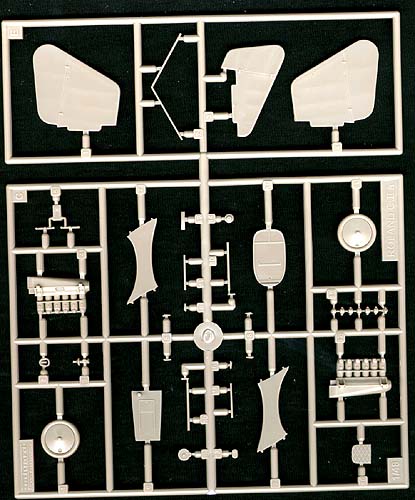 Upon opening the box, one is confronted with the now usual Eduard standard of packaging, with a card ledge stapled to the side. This holds the photoetch (in the case of earlier and Profipack kits) and/or quick-mask for painting the kit.
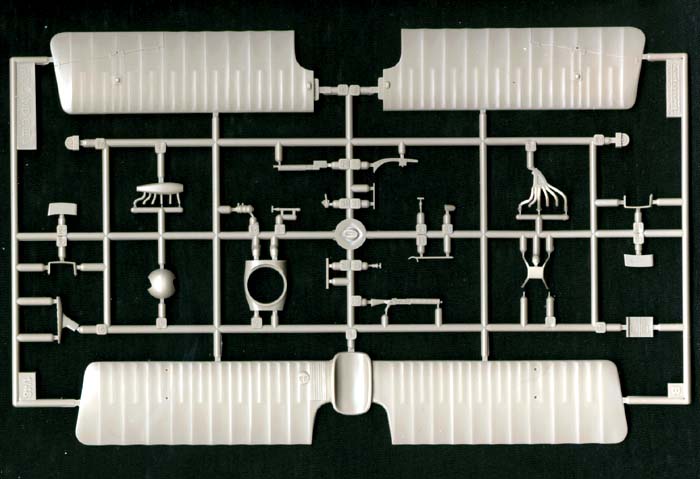 The wings are commendably thin – which is true to the original. The engine is in six pieces, with a choice of two styles of exhaust offered, these being the so-called 'bullet' and 'horn' types. A Spandau and a Parabellum machine gun are provided, although early C.IIs were only fitted with the observer's weapon.
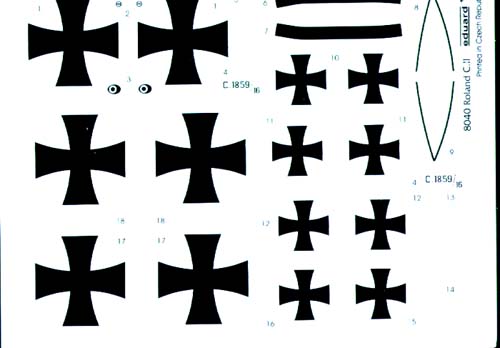 Decals are included for two aircraft, both of which are in the two-toned sprayed camouflage. The first option is a C.IIa from a flying school, while the second is the colourful aircraft seen on the boxtop. this aircraft has been seen in various photos and has a shark-mouth on the nose as well as 'curtains' on the windows. There are quickmasks provided to enable the builder to paint the mouth as well as the stripe on the tail and to protect the window while spraying the fuselage.