Samek 1/700 Resin German Light Cruiser Nurnberg
By Bob Pearson

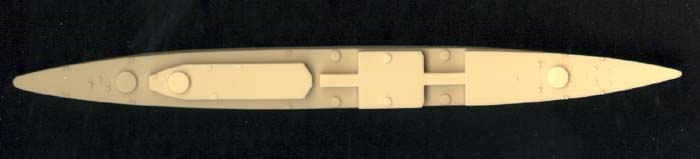 Samek continues to produce reasonably priced resin kits of uncommon ships. As with the others from this company I have reviewed, the detail is basic, but the possibilites are wide open. The kit contains 82 resin parts as well as a sheet of photoetch.
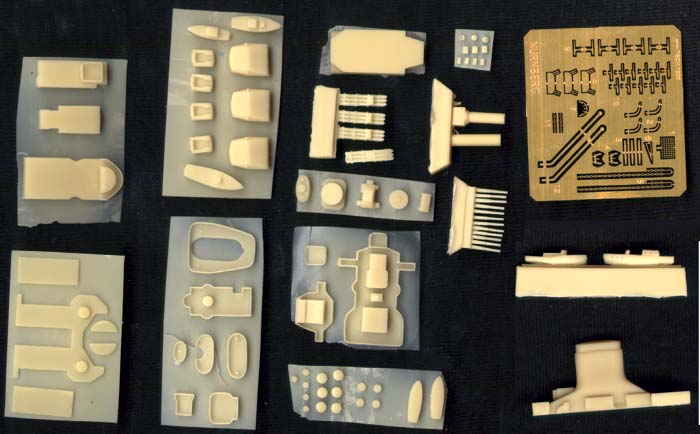 The hull is totally warp free ... I placed it on a glass pane and no rocking at all took place. .. most impressive. The detail on the hull sides is nicely done and has consistant porthole depth and location. Deck detail is minimal. The remainder of the resin parts provide turrets, superstructure, ships boats, directors, platforms as well as gun barrels. These last I am unsure if they belong to the main or secondary armament . . hopefully the main.
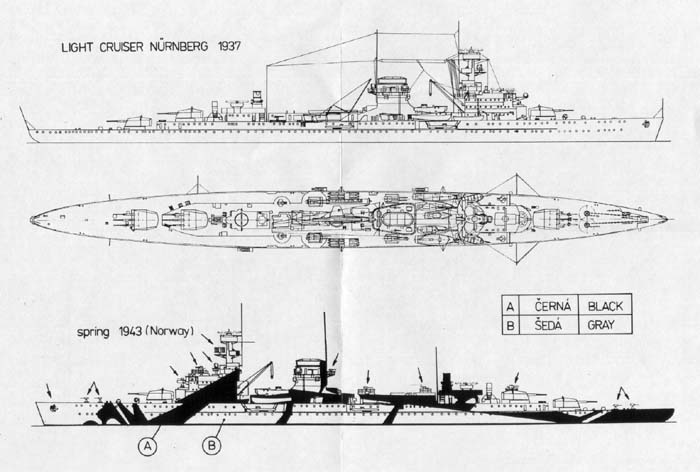 The instructions consist of four 8x11 pages which show an exploded view of all the parts, details on making the main and secondary armament from stretched sprue (hence my wondering which the barrels are for), a 1/700 plan of the side and top view of the ship, another showing the camouflage pattern carried. There is also a brief history of the ship.