Czech Master Resin's 1/72 Supermarine Seafire XV Frame Hook & Tail Hook
By Chris Banyai-Riepl
 |

|
 History
 The Seafire XV was a very popular aircraft, not only with the FAA but with other countries around the world. It flew with the French Navy and in Burma after the war, and during the Second World War it saw action in the Far East as well as the Atlantic. Canada also operated the type and in the end over 430 of the type were built.
 These latest kits from Czech Master Resin go a long way to rounding out a person's Spitfire/Seafire collection. Current scuttlebutt has it that they are going to be coming out with a Mk. XVII and an F.45 soon as well, which should just about cover the entire Seafire line by one kit or another. These are two separate kits but they share much in common, so I'll review them together.
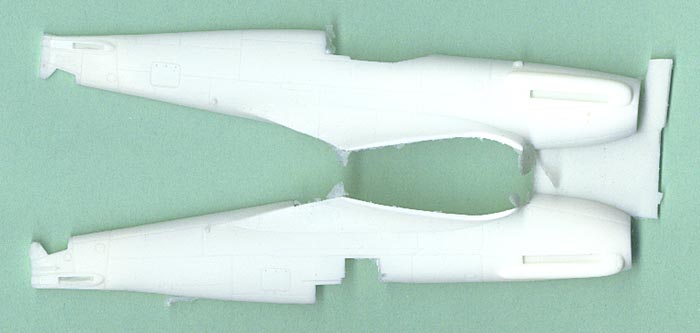
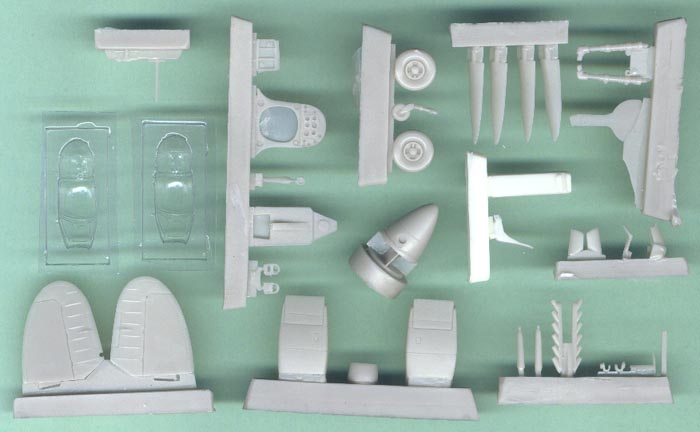 The parts come in a combination of gray resin and white resin and the molding on all the parts is very crisp. There was a few bubbles here and there, but for the most part the castings will need little more than the usual resin kit cleanup. The panel lines are recessed throughout and easily rival that of injection kits. There are different fuselages for the two kits, with the resultant different tail & A-frame hook arrangements, but the wings and other basic parts are the same.
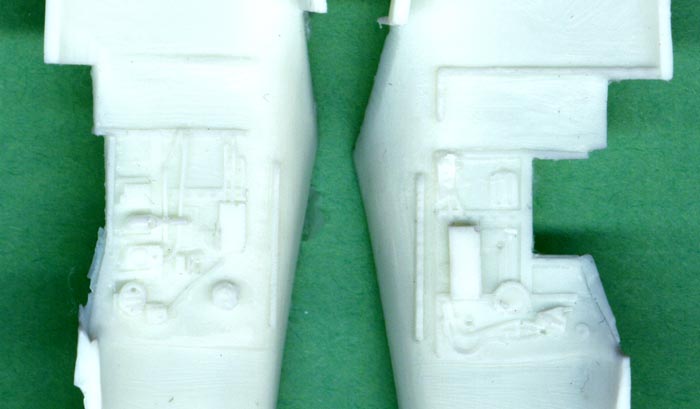 Looking at the cockpit, this kit comes with a nicely done interior. The sidewalls have lots of detailing present and you'll be spending some time painting all of this up. The instrument panel is well done as well, although those who have a spare etched brass one might choose to go that route for the acetate dial faces. The seat is missing seatbelts, but that's about the only thing missing from the interior. The hatch is open on the left side so much of this detail will be visible.
 The fuselage construction is very straightforward and it looks like you might be able to glue the fuselage together and then fit the completed interior in place. The one-piece wing is wonderfully done and accurately captures the gull wing underneath. There might be some troubles getting the trailing edge blended in with the fuselage but with lots of test fitting and careful sanding it shouldn't be too much of a problem. The tailplanes, being one piece, are also going to be easy to add on and in fact would probably best be left off until after painting.
 The landing gear is well done and the wheels have great hub detailing. The tailwheel is small and rather frail and some thought might be given to replacing that strut with some brass for some added strength. On the other hand, if you drop the hooks (in either kit) you'll have an additional point of contact back there and there wouldn't be much stress on the tailwheel. The tubular structure for in front of the tailwheel is not provided in the kit, but precise instructions are included for cutting it out of brass or styrene rod.
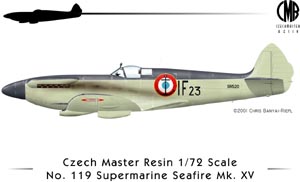
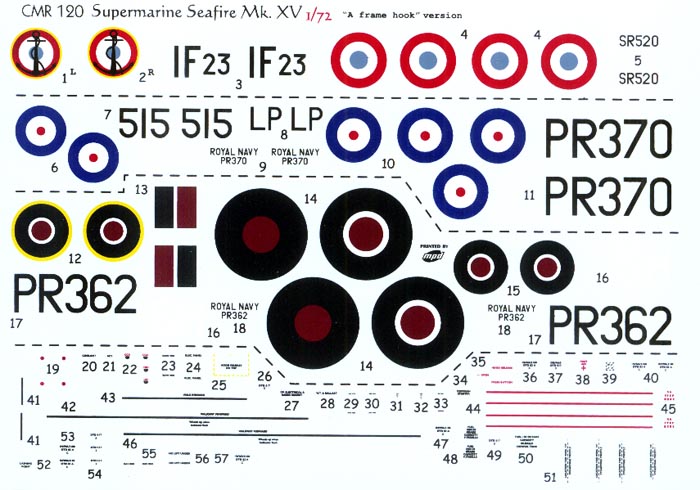 The decal choices are plentiful and about as colorful as you can get for a Seafire XV. The A-frame hook kit comes with three choices, two British and one French. The first British option is a dark slate gray/extra dark sea gray over sky scheme, PR362 of 806 Squadron, HMS Glory from the early part of 1947. The second British example is finished in the more traditional extra dark sea gray over sky with a high demarcation. The roundels on this one have the small red centers and it's from 773 Squadron out of Gibraltar, February 1950. Finally, the French example is the one seen in the profile above, finished in extra dark sea gray over sky. It's from Flottille 1F of the Aeronavale from the early 1950s.
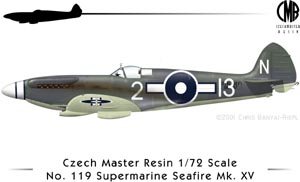
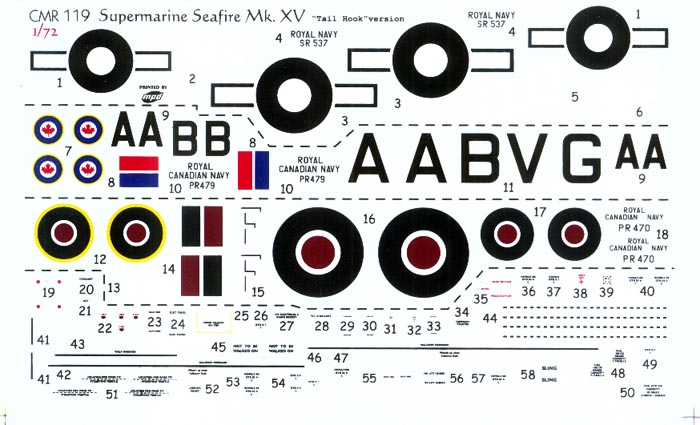 The rudder hook kit also comes with three choices, this time two Canadian and one British. The British example is one from the Far East and is the example illustrated in the profile above. Finished in dark slate gray and extra dark sea gray over sky, it's from 802 Squadron off of the HMS Implacable in February 1946. The first Canadian example is finished in extra dark sea gray over sky, with a low demarcation, and is of 803 Squadron, Royal Canadian Navy in 1946. This example still carries the standard British roundels. The second Canadian example moves the demarcation higher and introduces the small Canadian roundels. It's from 883 Squadron based out of Dartmouth in 1947.