Nagato: Building Aoshima's New 1:700 Release
By Dr. Kerry L. Jang
![]() |
![]() |
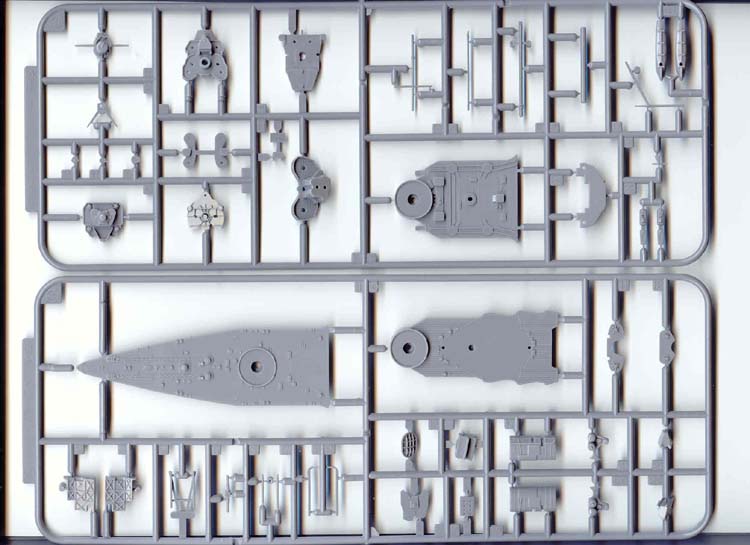
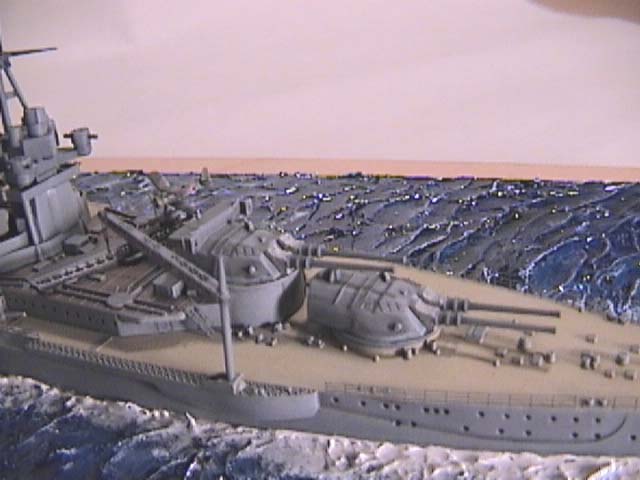
The most challenging part of the build was getting the forecastle deck molding mated to the hull. The hull opening on my kit was too wide and I felt that I could not get a clean joint by filling the gaps with putty and sanding. To fix this problem, I temporarily taped the deck molding to the hull on all join surfaces. I pushed in the hull sides prior to taping to close up the gaps. Once I was satisfied with the fit, I carefully glued in wood braces using CA to keep the hull sides pulled in the right amount. When this had set, I removed the tape and voila!, the forecastle deck opening was the correct size. It was a simple matter of popping the part into the opening and gluing from underneath with liquid plastic cement, leaving a clean joint that required no filling or sanding.
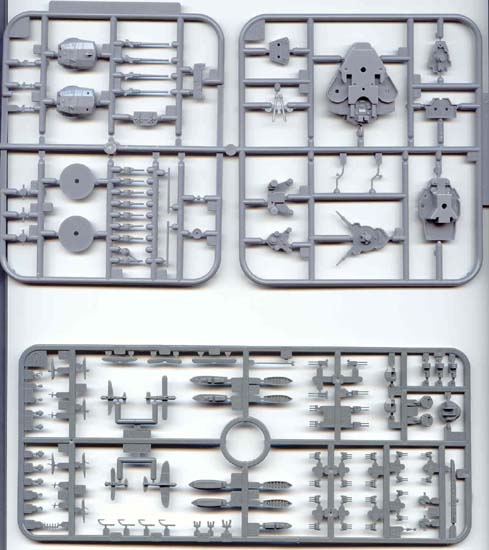
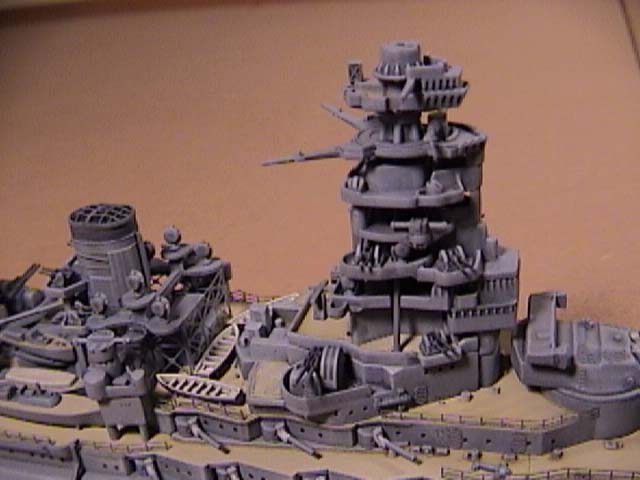
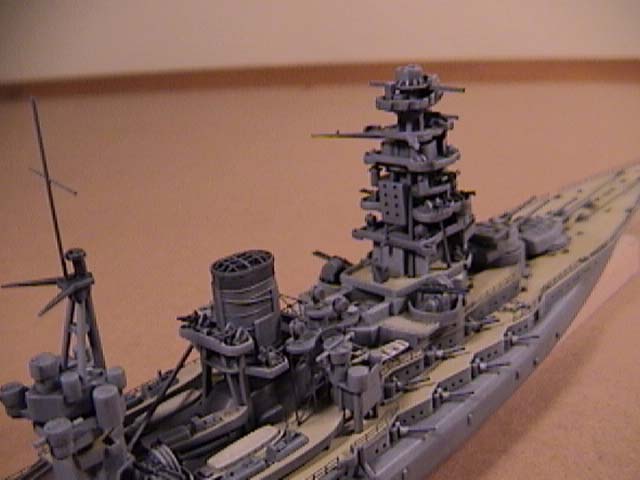
The instructions have a few errors concerning the placement of the searchlights on the bridge deck levels. Depending on what step you are on, the searchlights change position! This is easily fixed by test fitting the searchlights by fitting the next bridge level in place and noting where the bottom of the level does not land on the top of the searchlight. I elected to replace all of the AA mounts with Skywave parts, which just fit onto the kit platforms and levels.
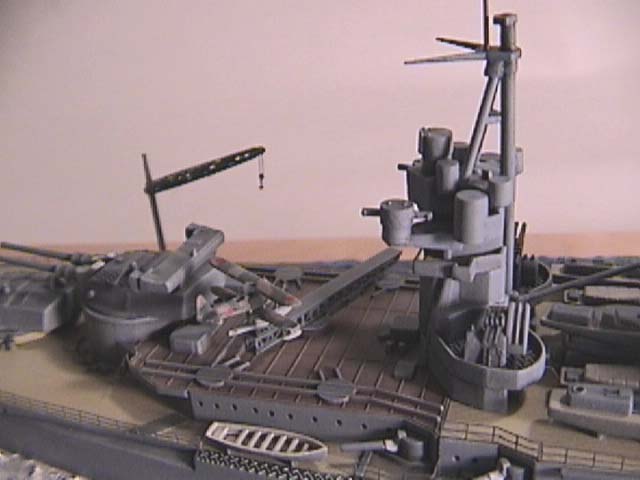
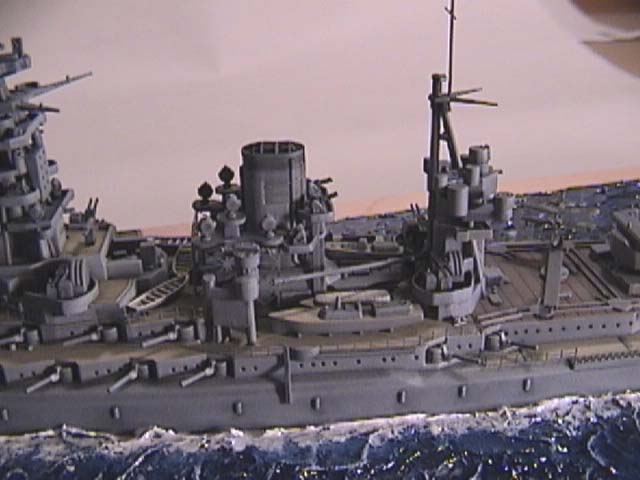
From the Gold Medal Models battleship set, I folded up a catapult and a crane. The railings contained in this set are a bit heavy to my eyes (now, my set is quite old, over 10 years) and Gold Medal Models is revising it. I had some leftover two bar railing from an old Tom's Modelworks set and from White Ensign Models Warspite kit. I fitted these here and there. I also added a number of watertight doors from the excellent White Ensign etch set, placement being guided by the drawings in the Maru Special monograph. The only other modification was drilling out some portholes in the superstructure parts according to the drawings in the Maru Special monograph and replacing the mainmast's topmast and yard with one made out of brass rod.
The wooden decks were painted a 50-50 mix of Tamiya Deck Tan and Buff. I oversprayed the decks with this mix lightened slightly with white to break up the solid color. The linoleum aircraft deck was painted in a 50-50 mix of Hull Red and Brown, lightened with white until a 'chocolate milk' color was obtained. Once again, this was over sprayed with a lightened version of this color for some variability. The hull was painted Tamiya's Neutral Grey, with details picked out with a small pointed brush. Blast bags were painted white darkened with German Grey. Finally, the funnel top and mast were painted in German Grey. I avoid 'actual' colors at all costs as in this small scale, black and white are just too stark.
After the wash had dried overnight, I discovered another mistake - the wash I applied was far too dark in places - especially on the hull sides that looked like it had a coating of soot! What to do!?! I decided to dry brush as usual with oil paints thinned with Windsor Newton's 'Liquin' artists medium (this medium speeds the drying of oil paints and thins it slightly without breaking down the binder and pigments as would mineral spirits or turpentine. It comes in little jars, is pinkish in colour, and is readily had from the art stores), but this time over dry brushing. What I mean is, pulling the oil paint over most of the surfaces, not just the high spots, effectively repainting the model with a glaze of sorts. You need very little paint to do this (and it would only work on one-color hulls), and you can pull and feather out the merest amounts - no more than you would use when dry brushing normally - to cover quite vast amounts of plastic. This saved my paintwork and much to my delight, I got an added dimension of depth - kind of like what you get when you paint model soldiers using artist's oils.
The model was left to dry for a few days and it was coated with Polly Scale gloss clear finish. This formed the basis for the decals and I used Gold Medal Model aircraft markings for the floatplane, Gold Medal Model flags for the ship, and Skywave decals for the ships name on the stern. Oh yes, the gold painted imperial chrysanthemum crest was added to the bow, but please do thin the crest to about half of the molded thickness by rubbing the back of the part on a piece of sandpaper. The model was given a coat of Polly Scale Flat finish to complete the project. I mounted the model on a simple based made out of maple. The sea is made out of acrylic gel medium applied with a palette knife in sweeping arc motions, and thicker applications of this stuff was used to make slight swells. The seascape was painted with artist's acrylics from a tube and when dry the model was glued into the sea. One way of having to avoid pushing paint or white glue to fill any gaps between the sea and the hull is to put a very thick coating of straight white acrylic around and just into the area where the hull will sit. After applying some glue to hold the hull on the base, lay the hull onto the base and gently push the hull into the still wet white acrylic paint that will push up and cover any gaps. It also forms little crests of white paint, helping form a realistic wake around the hull. The final step is when the seascape had dried out, a good thick application of Tamiya Clear on the ocean will give gloss and depth. Don't by shy with the Clear, let it pool up in the sea swells and against the hull. I used up half a jar on my seascape.