Tally Ho! 1/72 De Havilland Mosquito Part II
By Chris Banyai-Riepl

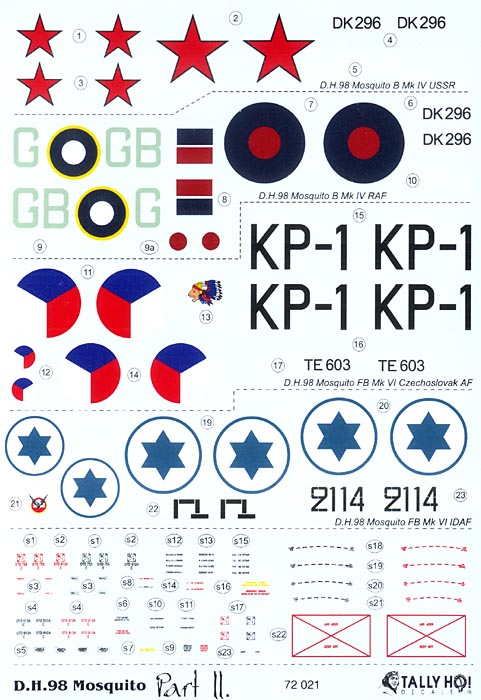 The Soviet example is a Mosquito B Mk. IV camouflaged in dark green and ocean gray over medium sea gray. The drawings depict sections under the Soviet stars having been repainted, but no information on the colors used is given. The British serial of DK296 is in black on the rear fuselage, but otherwise this option is fairly plain. What makes it interesting is how it ties in with the last scheme on this sheet. This last example is the same as the Soviet one, DK296, but in British markings. Coded G-GB, it is one of the planes that took part in the raid on the Gestapo headquarters in Oslo in 1942. Having these two schemes built side-by-side would be an interesting display.