
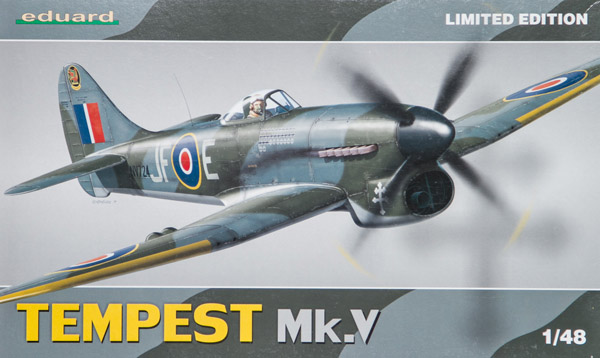
Eduard 1/48 Tempest Mk V Limited Edition
By Chris Banyai-Riepl
Overview
The Hawker Tempest was a development of the sturdy Typhoon and it aimed to cure some of the problems encountered with that early type. While visually very similar to the Typhoon, the Tempest Mk V was a very different aircraft, with a laminar flow wing, a longer fuselage, and a larger vertical fin. These airframe changes, coupled with a new engine, resulted in a very potent aircraft that was well liked by its pilots. The Tempest Mk V entered operational service in 1944, and soon became a popular aircraft with the Second Tactical Air Force in Europe.
The Kit
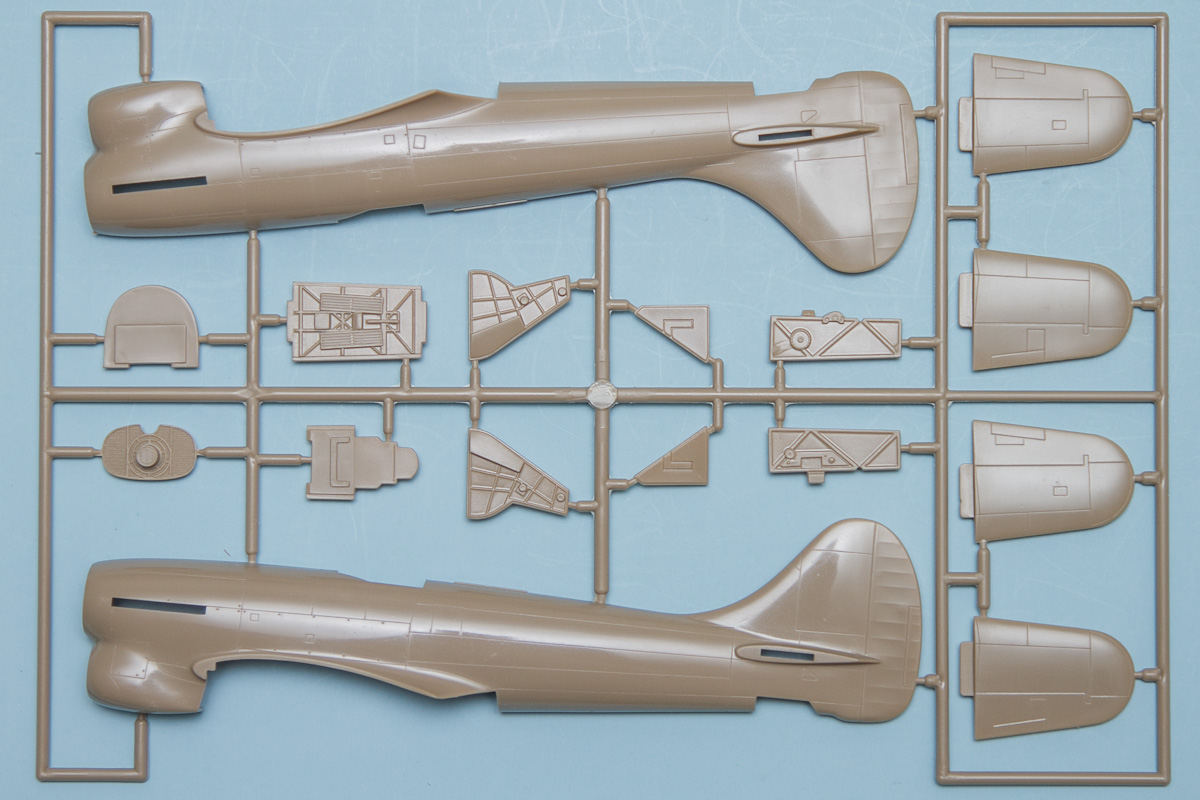 Eduard's 1/48 Hawker Tempest kit has been around for quite a few years, but it has been difficult to find in recent years. So this new Limited Edition release is quite welcome. Molded in tan plastic, this limited edition release also includes extensive resin details, photoetch, canopy masks, and a large decal sheet with lots of options. With recessed panel lines and all the multimedia detailing, this is an excellent choice for those looking for a quality Tempest V in 1/48 scale.
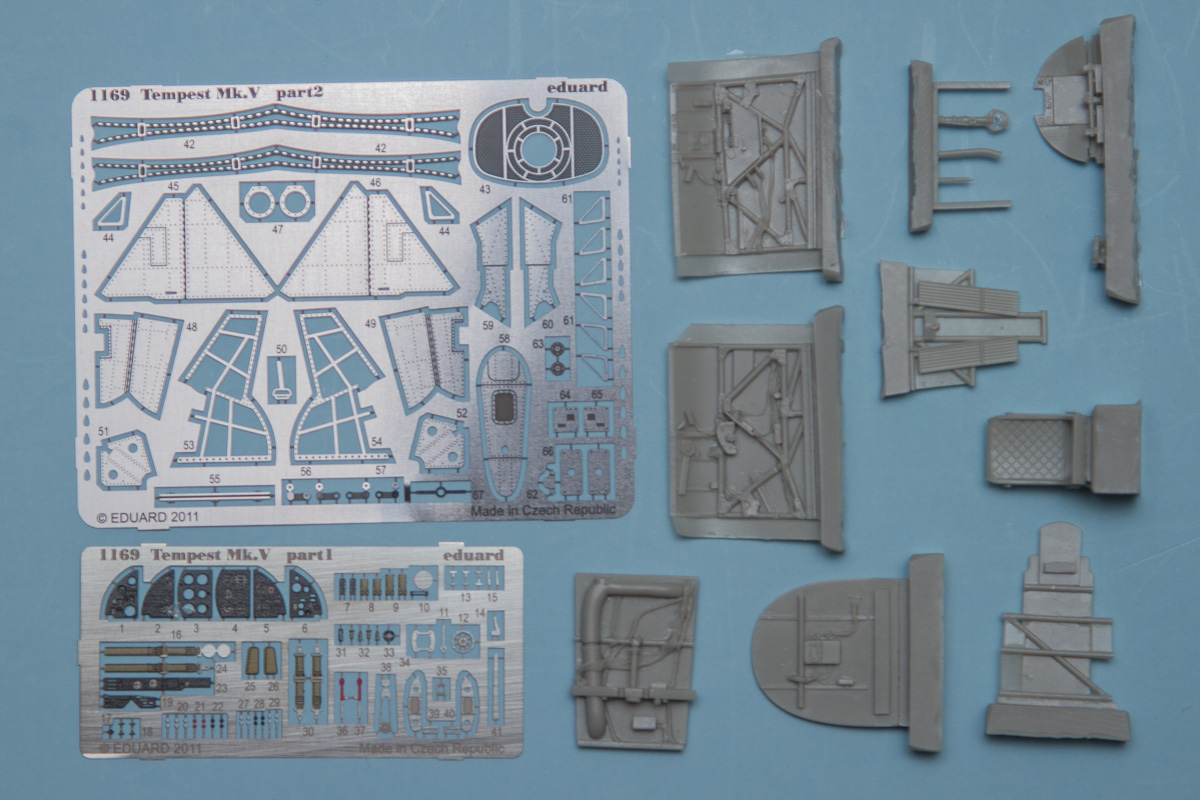 As usual, construction starts with the cockpit. It is here that the vast majority of the resin details are put to use. Starting with the seat, this has a resin back piece and a resin seat pan, with photoetch seat belts. This completed assembly then fits onto the back end of the resin floor base, which has a separate upper floor piece. This floor assembly provides a very realistic depth that is far better than the kit part. The control stick gets more photoetch details, as do the rudder pedals. A forward bulkhead rounds out this main assembly.
 Yet, the cockpit is not finished, for there are the sidewalls to deal with. The stock kit has this detail molded onto the fuselage halves, so you will need to remove that detail to make room for the new resin pieces. These have stunning detail molded in place, and it is further accented by the addition of photoetch details. These photoetch details include all the knobs and controls for the throttle and flaps, as well as trim wheels. The completed sidewalls then mesh up with the completed main tub, trapping the combination resin/photoetch instrument panel in between. When all of this is finished, you will have an incredible cockpit that will be a shame to hide in the fuselage.
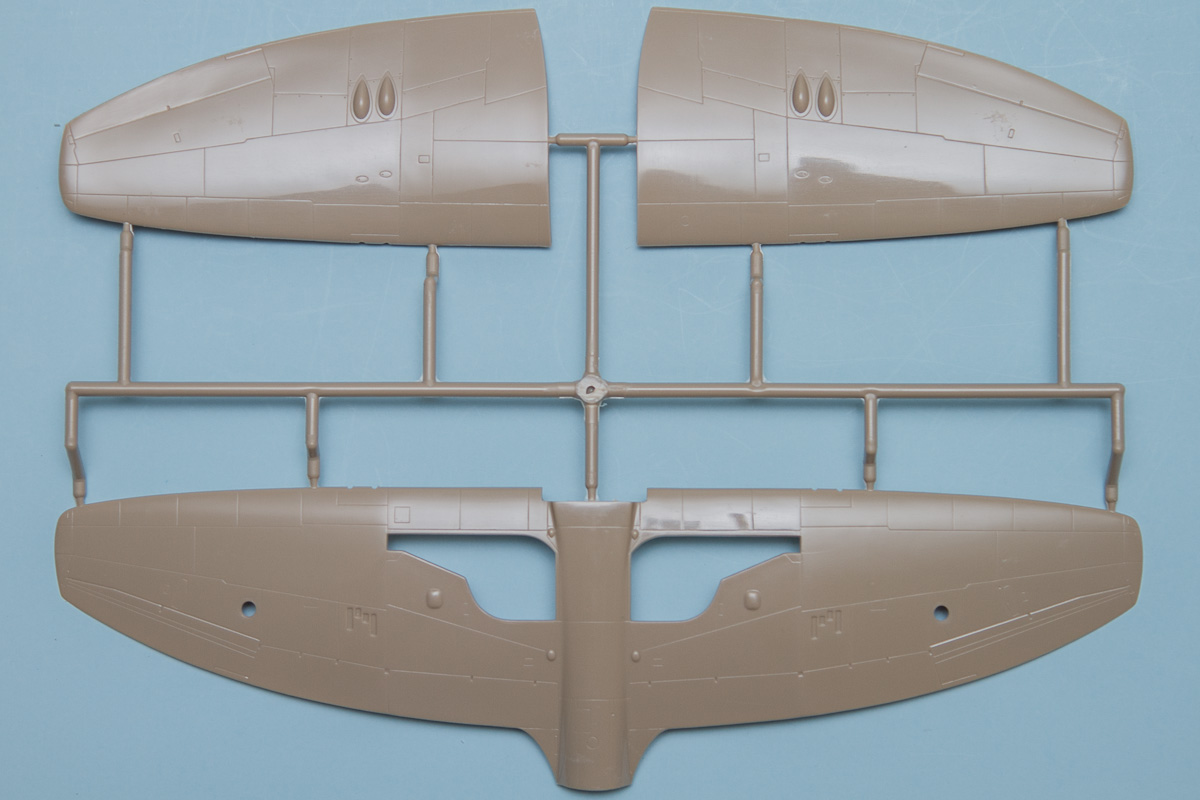
Turning to the fuselage, there is more photoetch for the interior bits there as well. There is a photoetch insert for the tail wheel well, and the chin scoop gets a photoetch grill face. Add the cockpit tub and the exhaust stacks and the fuselage can go together. The wings get some additional photoetch treatment in the separate main wheel wells, while the one-piece lower wing and separate uppers ensure proper dihedral alignment. With that done, the wing mates up to the fuselage and with the addition of the stabilizers, this kit is on the home stretch.
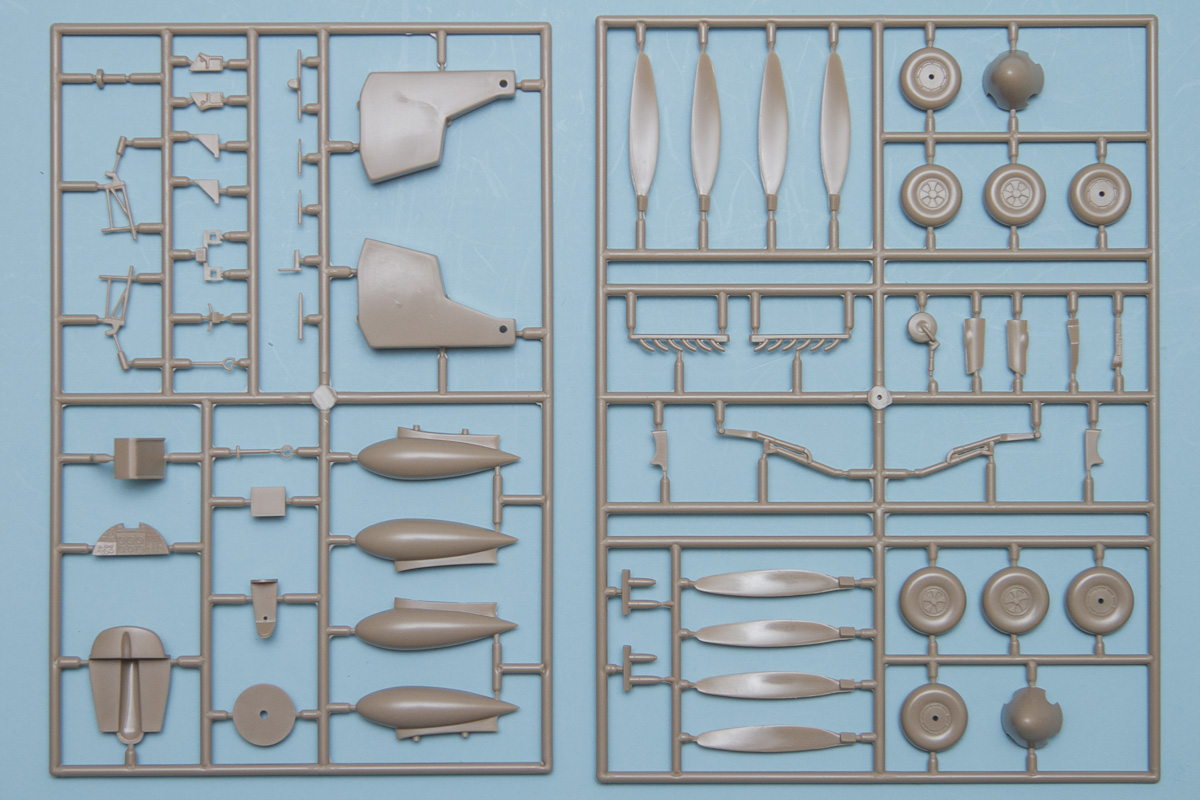 The finer details are upgraded with photoetch as well. For the main landing gear, the main large door has a separate interior face in photoetch, while the small outer doors are folded up entirely from photoetch. There are photoetch details for the wheel hubs, as well as actuator arms for both the struts and the doors. The tail wheel gets photoetch doors as well. Still on the underside, the drop tank gets a photoetch sheath around the pylon. Flipping the plane over, there is a photoetch canopy rail and a resin/photoetch gunsight. With those in place, the canopy can go on, and attention turns to painting.
The Tempest V had little variation in camouflage colors, and all of the options in this kit are finished in the same Dark Green, Ocean Gray, and Medium Sea Gray, with Yellow leading edges of the wing. The first two decal options cover two aircraft flown by Pierre Clostermann of No 3 Squadron. The first is SN222, and it has a red spinner, JF-E fuselage codes, and Clostermann's scoreboard on the right side. It also has the name 'Le Grande Charles' written under the cockpit. The second of Clostermann's machines is NV724, which has a black spinner, JF-E codes, and the No 3 Squadron emblem on the fin tip. On the right side is Clostermann's scoreboard, while the nose has a Cross of Lorraine.
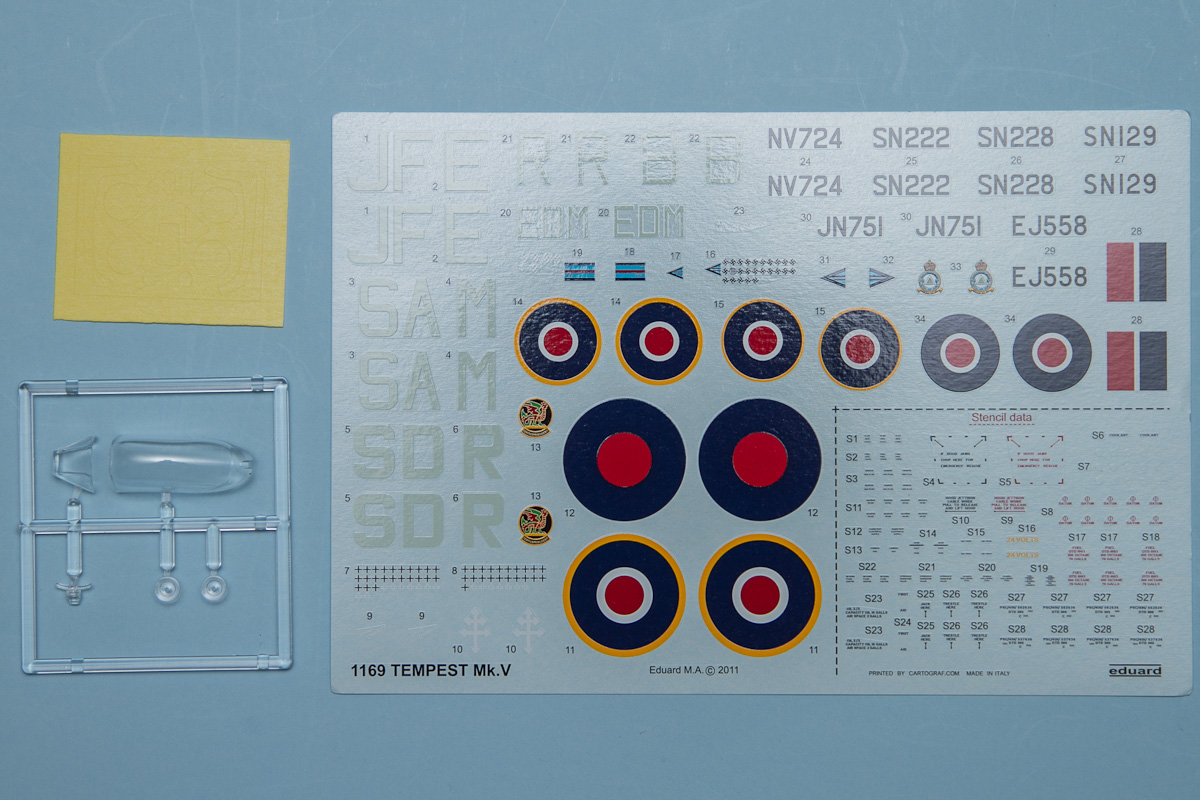 Next up is Squadron Leader Cornelius Sheddan's SN129 from No 486 Squadron. It has a black spinner, SA-M codes, and a scoreboard and pennant flag on the right side under the windscreen. Flight Officer B F Miller's EJ558 is also present, with a Sky spinner and R-SD fuselage codes. Turning the page, we have Wing Commander Evan Mackie's SN228, coded EDM, from No 122 Wing. This plane has a yellow spinner, the squadron emblem on the fin tip, and Mackie's scoreboard on the right fuselage side.
For those who like stripes, the last two options are catered to you. The first striped Tempest is Wing Commander Roland Beamont's JN751, coded R-B, of No 150 Wing. It features a yellow spinner, a pennant flag on both sides, and four black and three white stripes on the lower wing only. This one dates from early 1944. The second striped option is actually the same plane and same pilot, but this time with the standard three white, two black invasion stripes on the wings and fuselage.
Conclusion
This is a welcome update to the Eduard Tempest kit, and a timely release for those who were having difficulty finding the original Tempest release. With the addition of the resin and photoetch, coupled with the impressive decal sheet, this is a model that will need no aftermarket accessories to build up into an award winner. My thanks to Eduard for the review sample.