
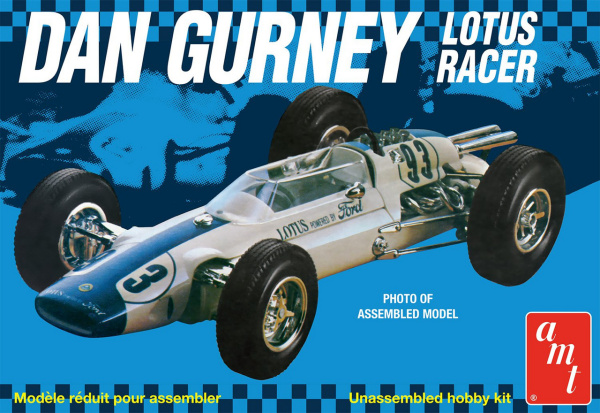
AMT 1/25 Dan Gurney Lotus Racer
By Jacob Russell
The Car
In 1965, Jim Clark won the Indianapolis 500 in a rear-engined Lotus-Ford at the record speed of 151.388 mph, ending once and for all the dominance of the front-engined Offenhauser-powered “roadsters” that had dominated at Indy from the early 1950s into the 60s. Jim Clark’s hard-fought victory was the culmination of 3 years of diligent work by the brilliant engineer Colin Chapman and his team of talented craftsmen and drivers. American race driver Dan Gurney had met with Chapman in England and suggested that he consider entering a car at the Indianapolis 500, and he introduced Chapman to his contacts at Ford. These contacts culminated in the Ford Fairlane V-8 powered Lotus 29. The Lotus 29 was very similar to the Lotus 25 Grand Prix car. It had a longer wheelbase, an enlarged fuel capacity and suspension that was offset 2 and 3/8 inches to the left.
 |
 |
The Lotus 29 was an immediate success. In 1963 Jim Clark qualified fifth at 149.750 mph and finished second at an average speed of 142.752 mph. Dan Gurney finished 7th in a sister car. True, Parnelli Jones won the 1963 Indy 500 in a roadster at the record speed of 143.137 mph. And AJ Foyt won again in another Offy-engined roadster in 1964, but the handwriting was on the wall. By the time Jim Clark finally won in 1965 in his Ford-powered “funny car” (as the rear-engined cars were derisively called by Indy traditionalists), only 5 front-engine roadsters were able to qualify.
 |
 |
The Kit
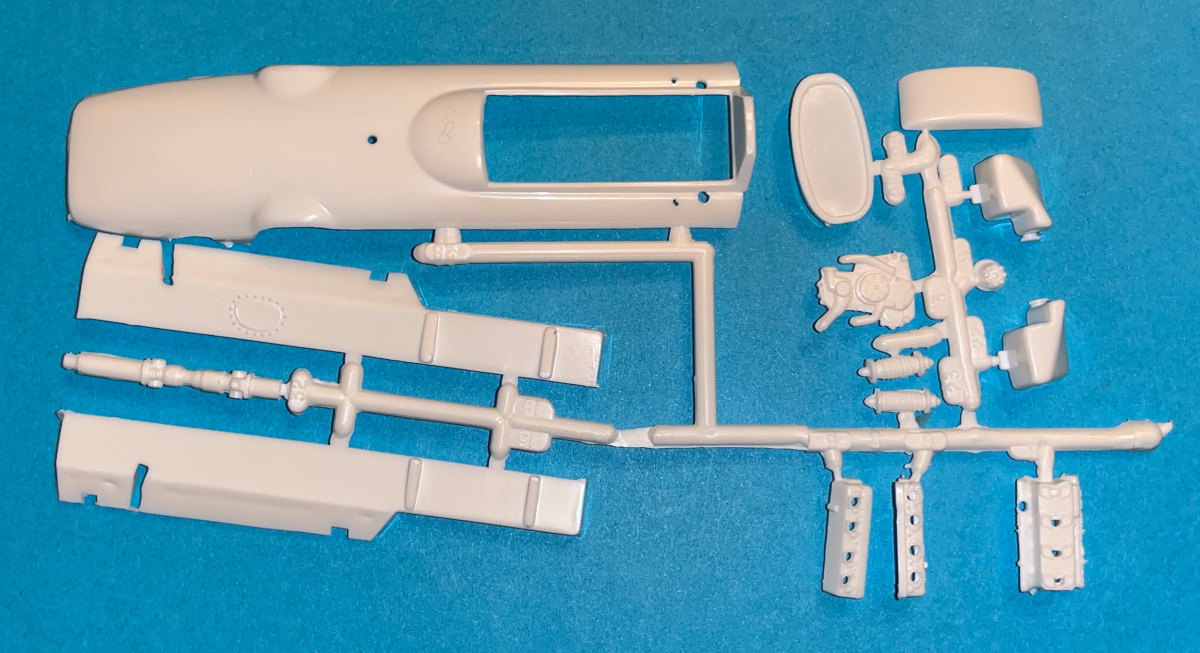
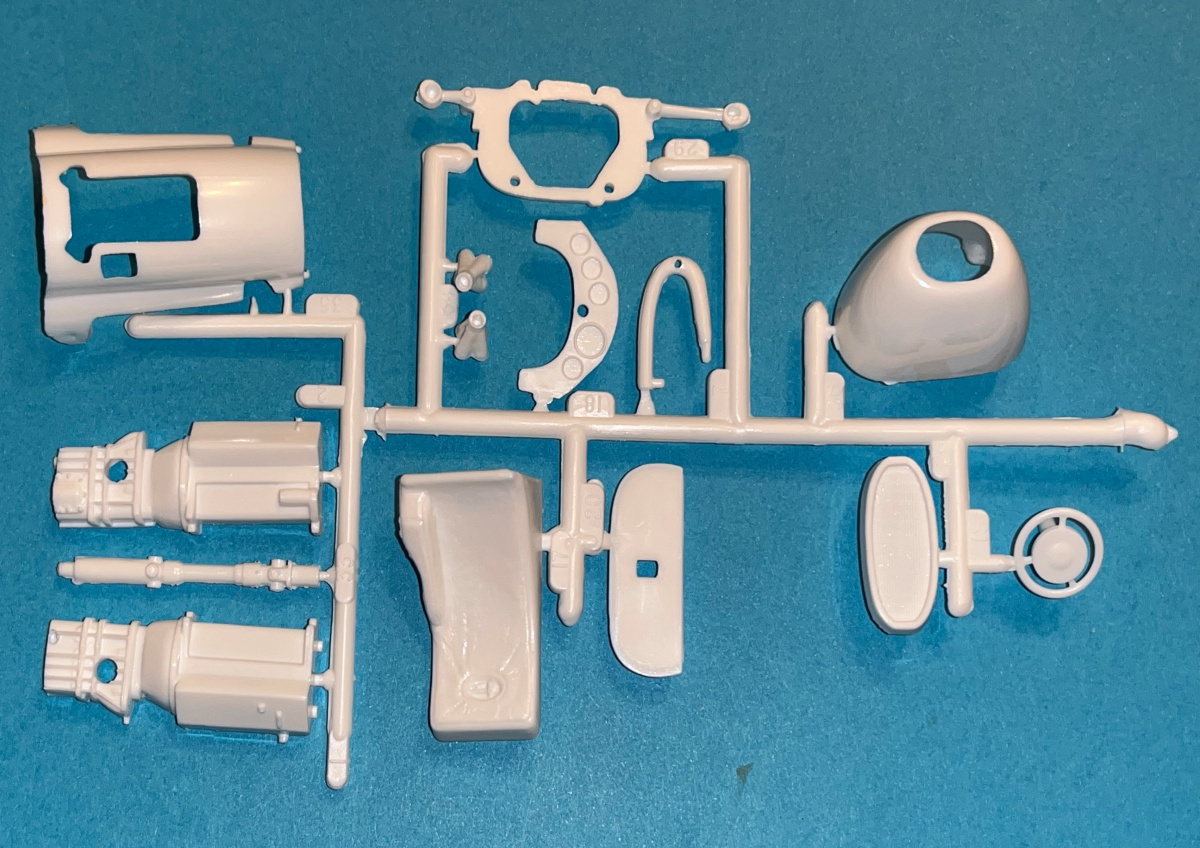
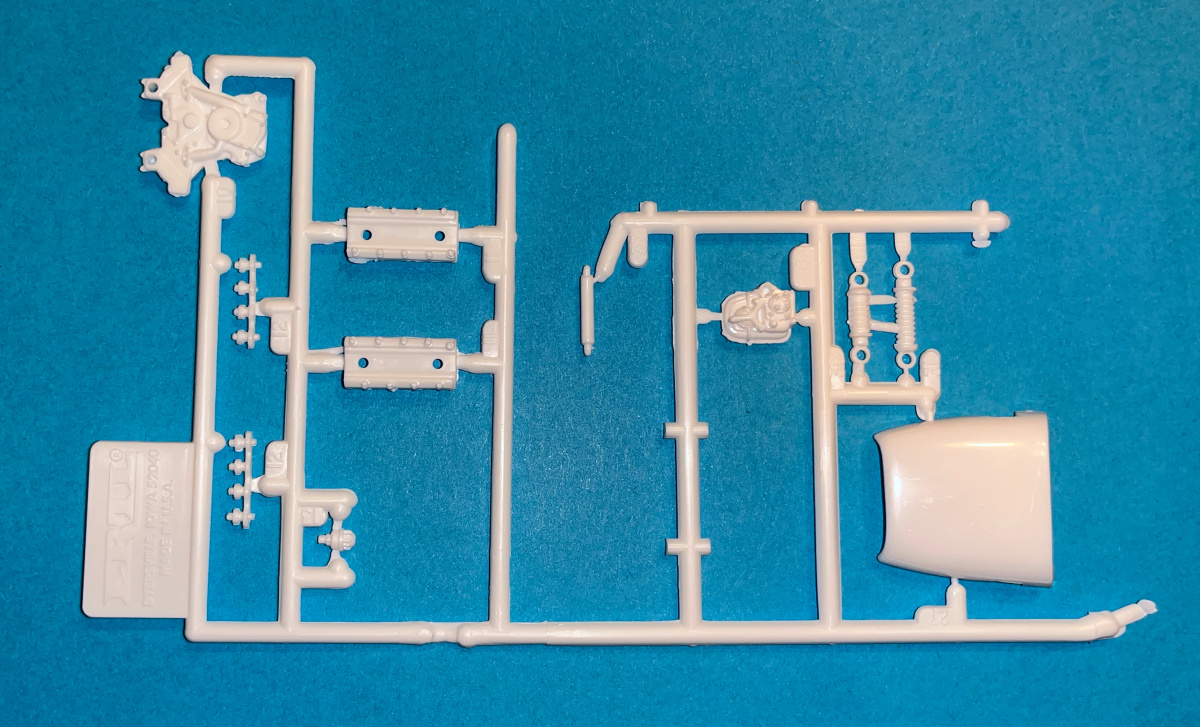
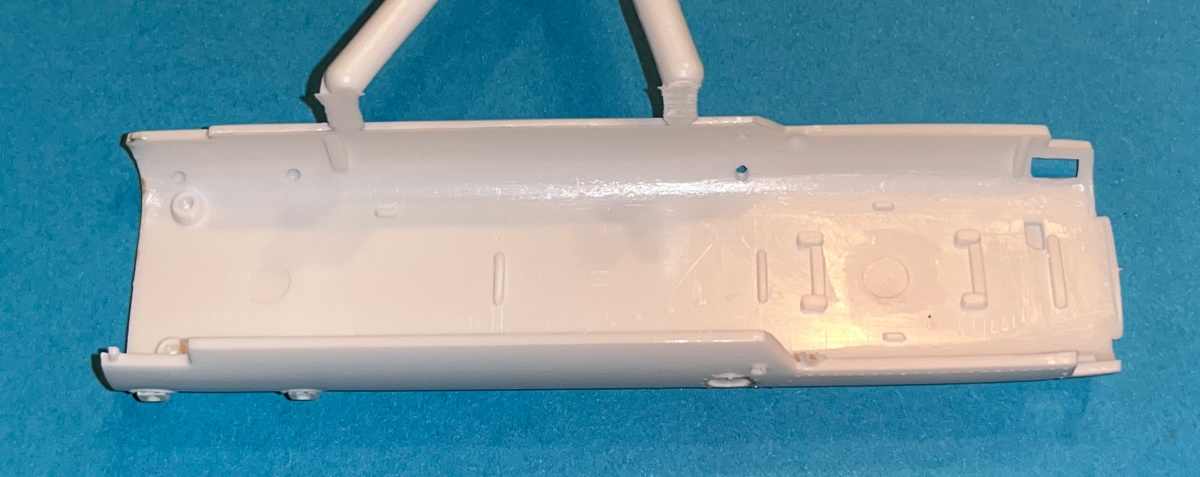
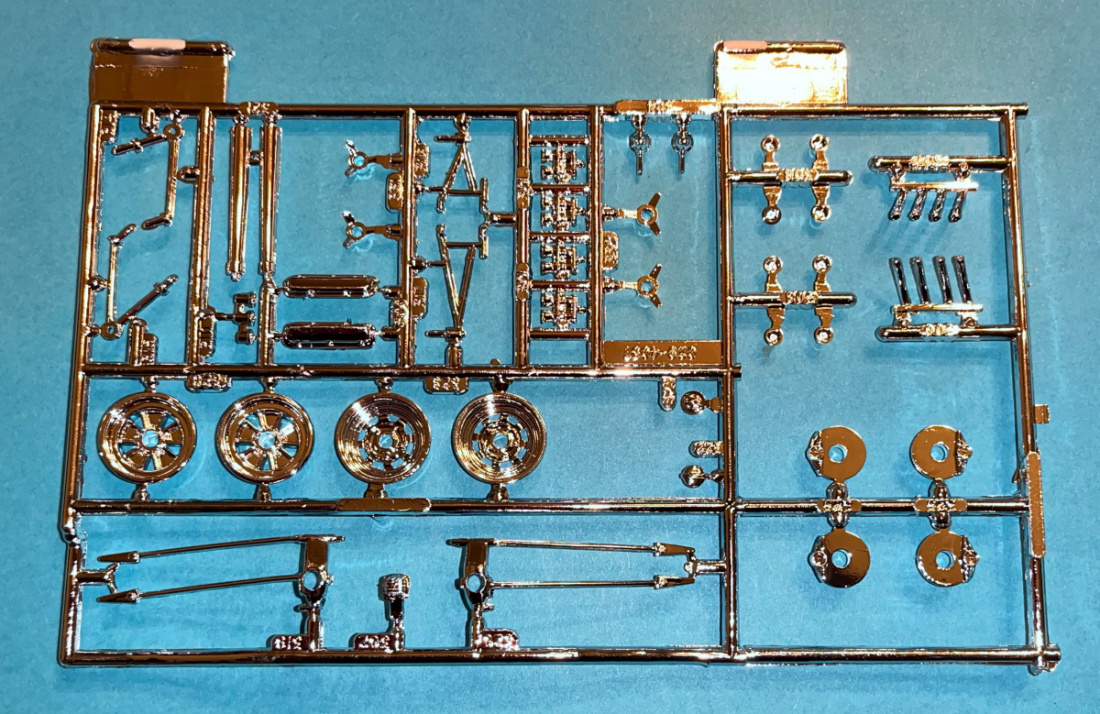
This is Round 2’s reissue of the original 1963 AMT kit. It consists of 106 parts on 6 sprues molded in white, black, clear, and chrome. Considering the kit’s age the quality of the molding is superb. The parts are crisply molded and are free of flash and sink marks. The kit gives you the choice of either the fuel-injected dual overhead cam engine with individual stub exhausts which ran during pre-race testing, or the Fairlane V-8 in its final configuration of 4 2 barrel Weber carburetors and the complex “snake’s nest” of individual pipes that came together at the engine’s rear.
 |
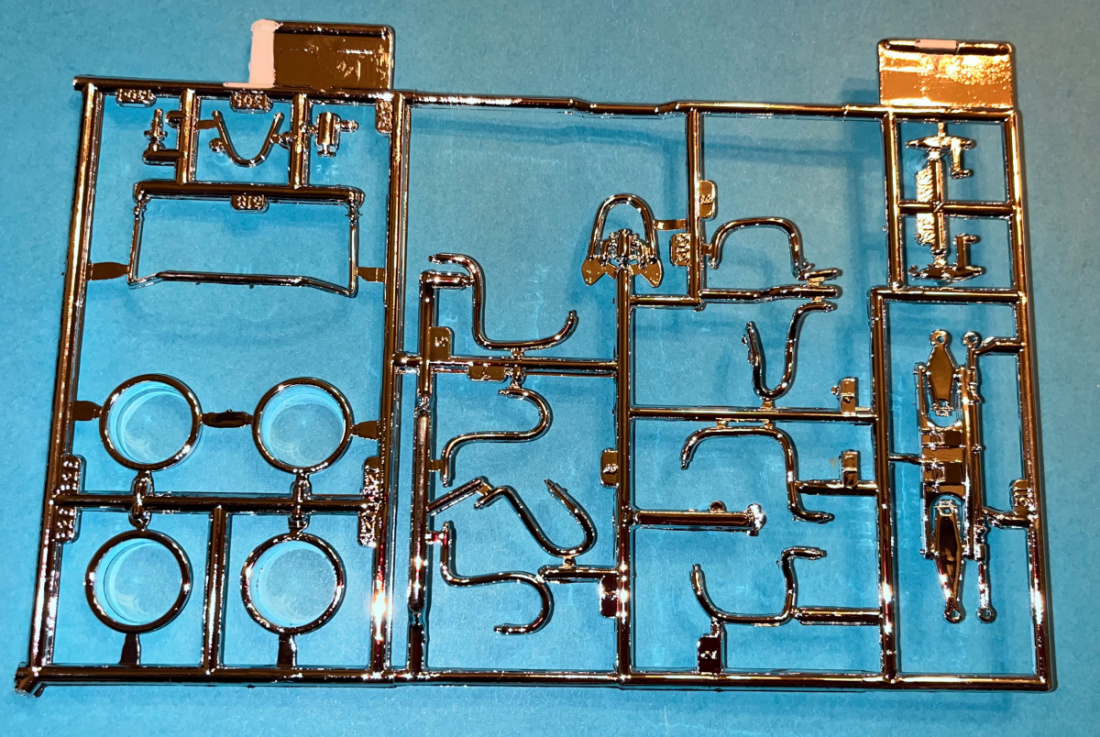 |
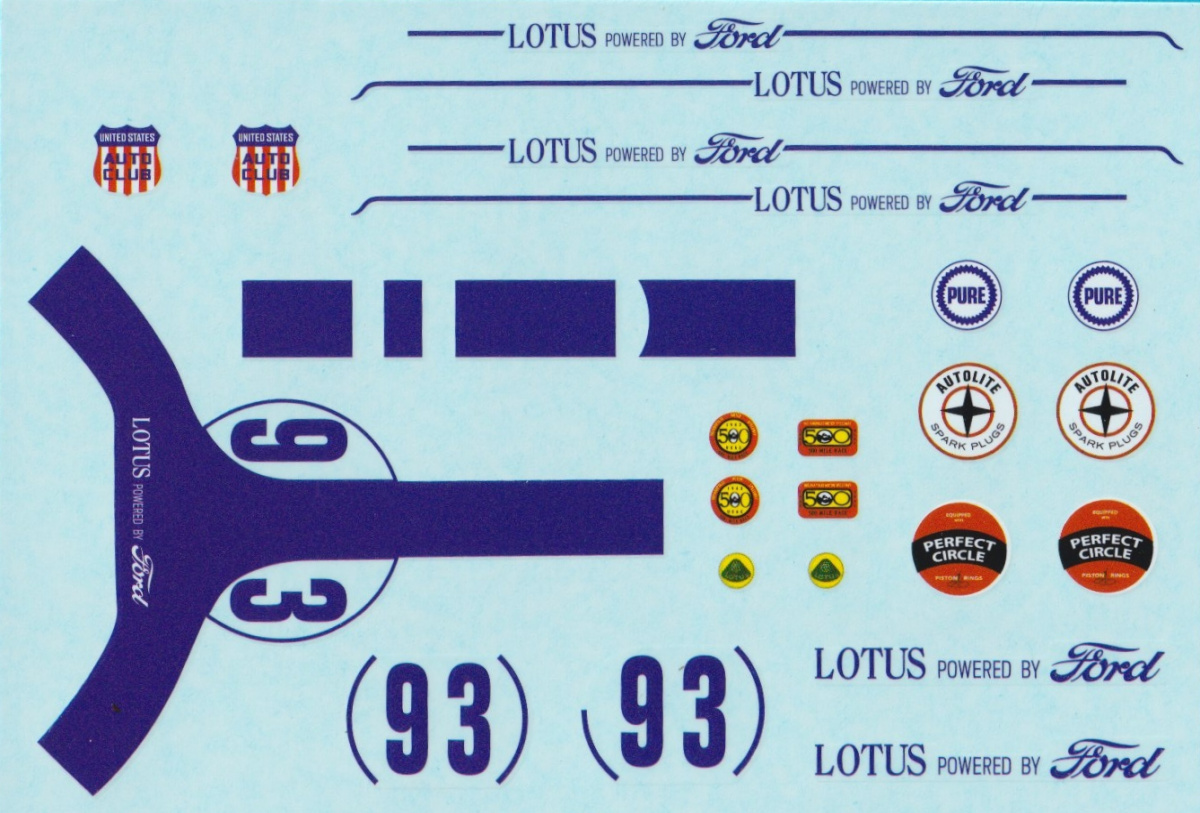
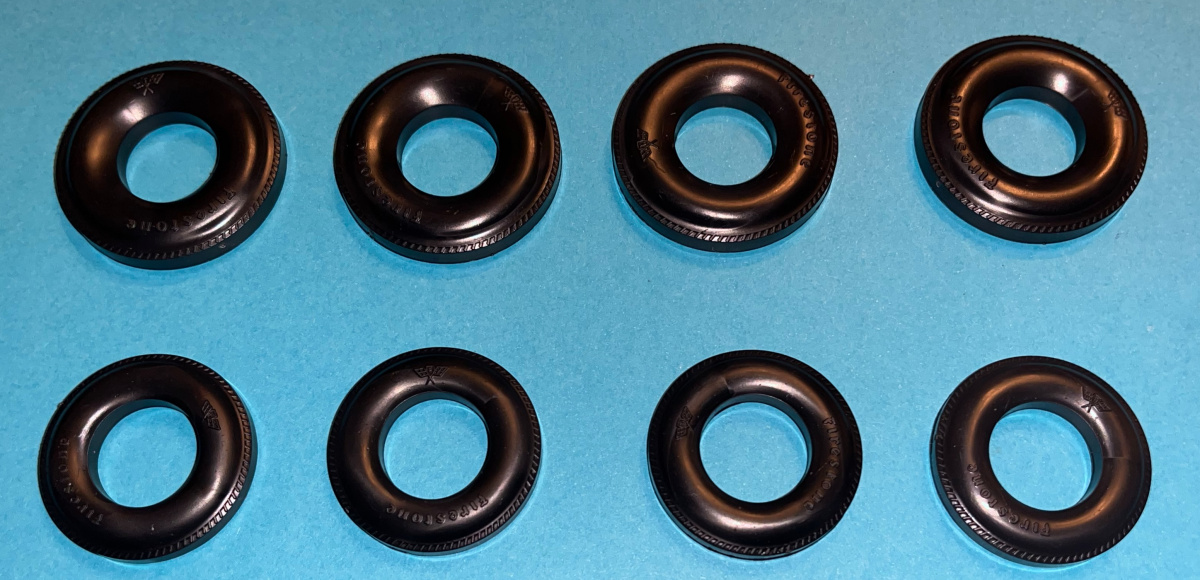
The monocoque chassis and the drivetrain are faithfully depicted. The suspension has the correct 2 and 3/8” offset to the left, which took in account that all turns were in one direction, the left. There are a few issues worth mentioning. The Firestone tires are each molded in 2 pieces of black plastic and are the weakest parts of the kit, being far too tall. This negatively affects the stance and “sit’ of the finished model as it just doesn’t look right. The other weak point of this kit are the decals. The printing is not as crisp as one would like and the blue has too much red in, giving the decals a purple cast rather than pure blue.
 |
 |
Conclusion
This is a great kit of a very important car in the history of the Indianapolis 500. It signaled the end of the front engined Offenhauser engined roadsters and ushered in an era of innovation at The Brickyard. Round 2’s Lotus 29 kit is accurate and well detailed and the kit’s faults (the wheels and decals) can be rectified by the aftermarket. I recommend this kit and I purchased mine at Skyway Model Shop; it can found easily online.
References
Indy Cars of the 1960s, by Karl Ludvigsen, Ludvigsen Library Series/Iconografix, 2001