White Ensign Models 1/700 Resin HMS Chester
By Dr. Kerry L. Jang
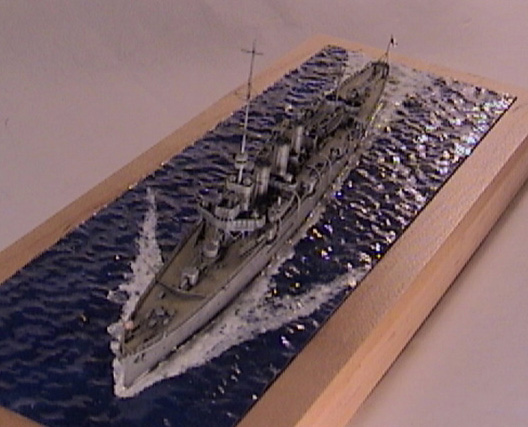 |

|
|
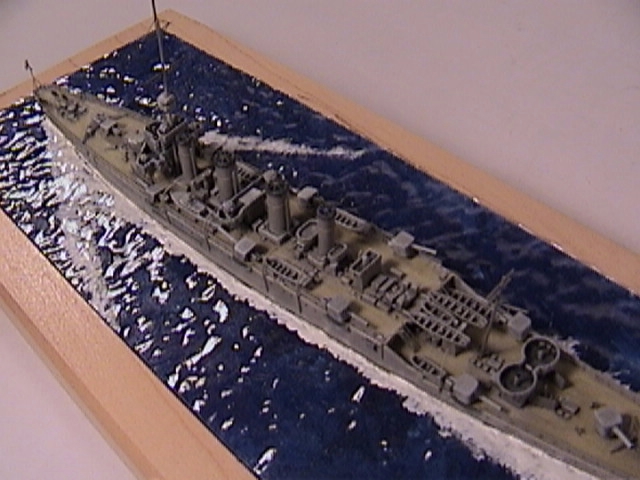 The kit is the usual mix of resin, photo-etched brass, and plastic and brass rod typical of White Ensign Models. The main resin casting is the hull, and it is done in a white resin with a huge amount of molded-in detail, including all four funnels. The hull casting was cleanly cast and straight. A few air bubbles were found, mainly limited to the top of mushroom vents and the corners of deckhouses and other vents. These are easily filled with putty. On first glance, the hull casting looks almost perfect, no doubt due to the white resin used to cast the kit, which tends to obscure any imperfections. It was only after I had applied a coat of paint and found that the hull casting actually had quite a rough surface. The hull had a rash of resin nodules on the hull and deck. The rough texture on the hull is easily sanded off, but those on the deck required some very careful sanding so as to not obliterate the plank lines. My guess is that the moulds for this kit are starting to show a bit of wear.
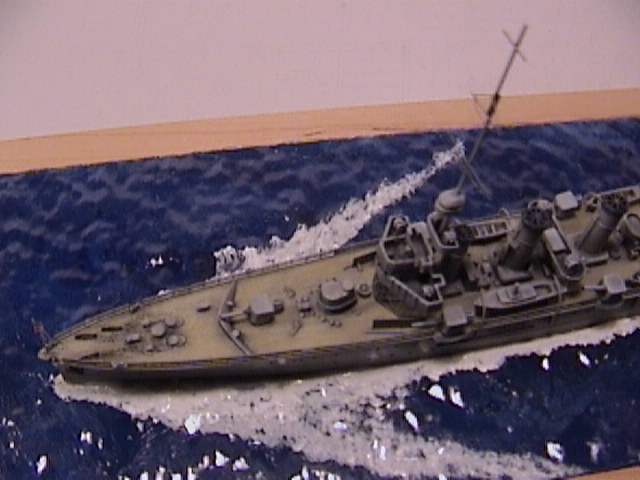 In contrast to the hull casting, the quality of the small resin parts leave a lot to be desired. In this kit, the four large searchlights and two small ones were indistinct lumps of resin that were so poorly cast that they had a decided lean to them! I replaced mine with Skywave parts from the spares box. The ships boats are similarly terrible and this is a serious problem because Chester carried so many of them they are focal points of the model. The interiors show soft detail and the shapes of some of the boats are really odd. For example, the dinghies look like flat-bottomed sampans! I tried to reshape them and fix up the interiors, but no luck. I just happened to have a set of ships boats by Modelkrak and replaced the WEM versions with the closest equivalents I could find. Unfortunately none of the Modelkrak boats are a good match, but they are a lot more crisply cast and look a whole lot better so I used them anyway.
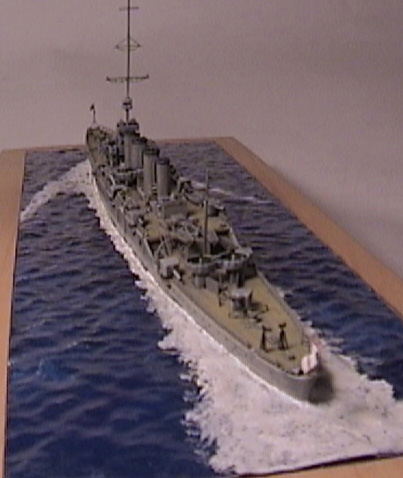 The kit has very few parts in general to put together and I had the parts ready for painting and final assembly in only a few hours. The only part that gave me a bit of problems is the base of the bridge structure, which has four cast legs that fit accurately and positively into location holes on the deck. The problem is that the legs are too short when the etch brass support lattice is added to the bottom of the bridge base. I replaced these legs with brass rod. Speaking of the etched parts, they are very delicate and very nicely detailed. They include everything you will need and want for this model and they are as close to scale as you can get them. However, WEM continues to provide parts such as large boat davits in flat etched brass. These look stupid and I replaced these with replacements made out of fine brass rod. I elected to show the ship's boats in a stowed position, as I did not think I was able to hang them from the davits realistically over the ships sides. The only other fit problem I had was with the etched boat rack that was too long to fit into the space between the forecastle break and the aft superstructure.
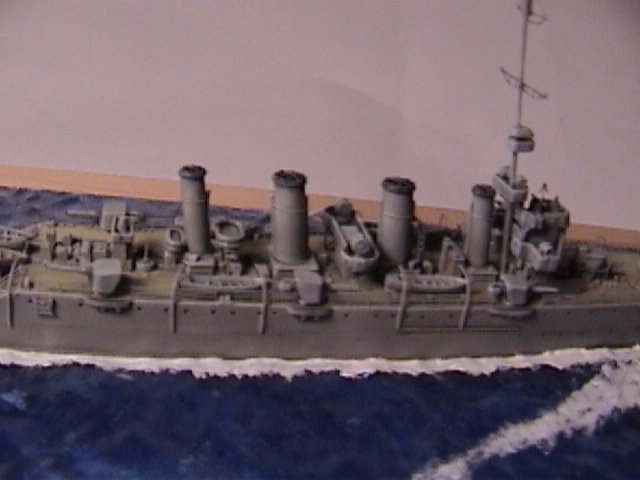 How you do the shading and the colours you choose for the washes and the highlighting makes a big difference in showing the model 'at war' or 'during peacetime'. I began with the decks. Normally, I would use a dark brownish-yellow wash mixed from artist's oils and turpentine. A dark blue-black would be used for the hull. Done in moderation, this would produce a pristine look that has some depth and character. To reproduce a war weary in-service look, I applied a wash of black over the entire model, even the yellowish deck. This gave the model a worn look and tended to hide some of the surface blemishes. I drybrushed the model with light gray again mixed from artist's oils, the deck a mix of yellow and ochre - carefully avoiding the areas with a rough texture.
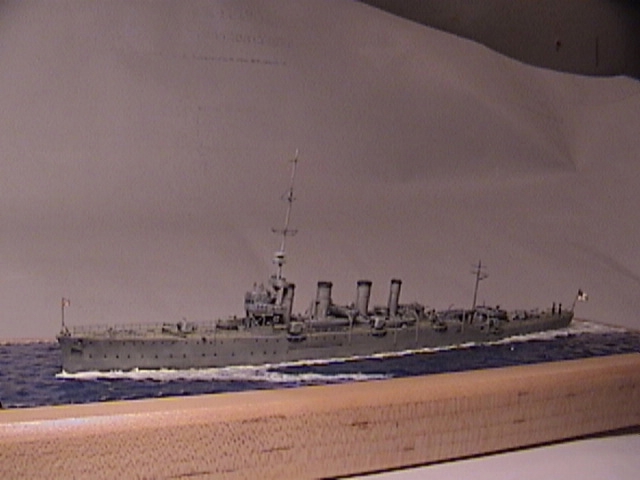 I placed the model into a seascape made with the Faller's plastic water sheet. This was glued down to a base in which was painted various shades of blue, green and violet with Tamiya Clear. The model was glued onto the plastic sheet but before gluing the hull to the base I applied white artist acrylic paint straight out of the tube all around the hole to begin to simulate the wake. This was applied rather thickly to fill in any gaps between the hull and the 'sea'. Once this was dry, I stippled white artist acrylic straight from the tube to create the wake and any turbulence and whitecaps. The whole base was given three heavy coats of Tamiya Clear that gave the 'sea' some added depth.